The Occupational Health and Safety Alphabet: More Than Just Concepts

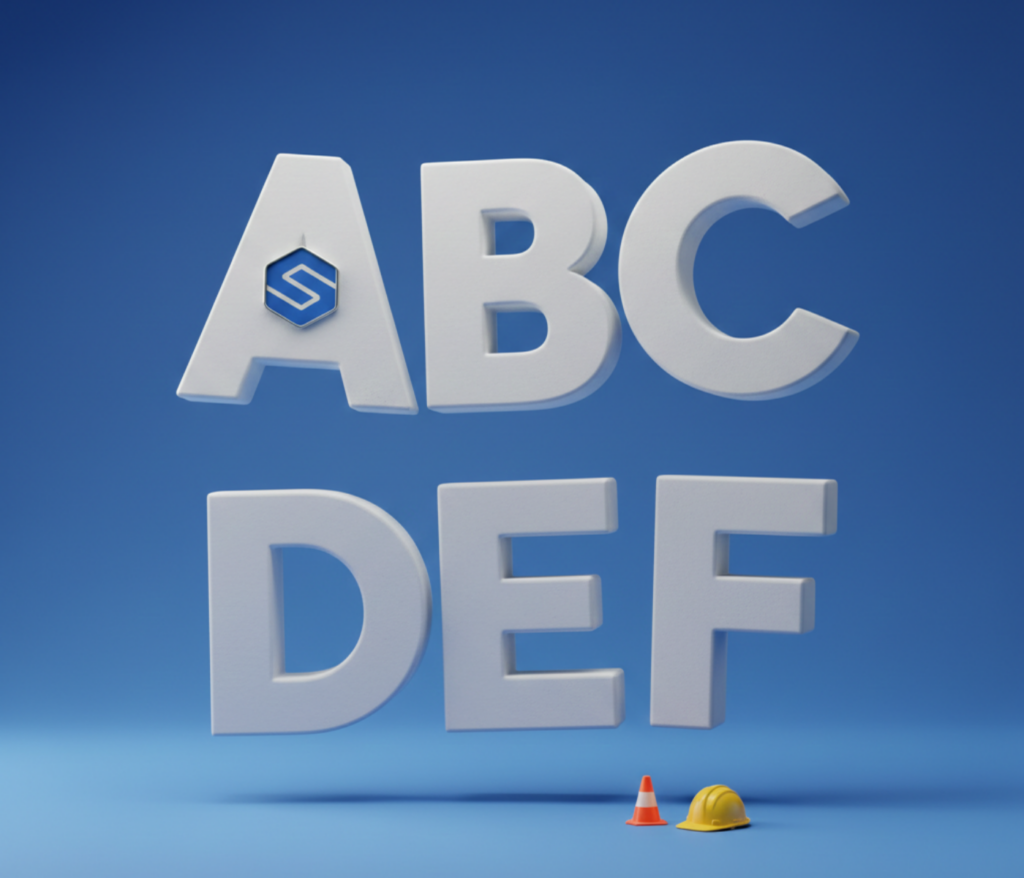
When we talk about Occupational Health and Safety (OHS), many organizations still think about regulations, documents, or audits.
But the reality is different.
Prevention is not a checklist.
It is a system that must work every day.
The Occupational Health and Safety Alphabet helps illustrate this idea: every concept, every risk, and every element is part of a connected system. It starts with the basics, like understanding what a workplace risk is.
Because the problem is not a lack of knowledge.
The problem is not managing risks properly.
🔤 From A to Z: Prevention Is in Every Detail
From concepts such as:
- Working at heights, where a fall can have serious consequences
- Barriers and signage, essential to control access to hazardous areas
- Cables, a common source of trips or electrical risks
- Safety glasses, critical to protect against impacts
- Industrial hygiene, key to avoiding exposure to harmful substances
To elements like:
- Safety inspections, which help detect risks before they occur
- Personal protective equipment, such as helmets, masks, or ear protection
- Communication and signaling, crucial in critical situations
Each of these elements is part of a broader system.
💡 And this is the key:
they do not work in isolation.
⚠️ The Most Common Mistake: Treating Prevention as Separate Pieces
Many organizations understand these concepts.
They document them.
They even apply them.
But they fail at something critical:
👉 they do not manage them as an integrated system.
This leads to problems such as:
- scattered information (spreadsheets, PDFs, emails)
- lack of follow-up on actions
- difficulty coordinating teams
- limited visibility of real risks
And the result is clear:
known risks… poorly managed.
🧠 Real Prevention Is Not Theoretical, It’s Operational
Understanding the OHS alphabet is important.
But applying it correctly is what makes the difference. Turning concepts into practice is exactly what builds a real safety culture in the workplace.
Because in real operations, prevention requires:
- identifying risks in real time
- acting quickly
- tracking corrective actions
- ensuring full traceability
💡 It’s not about knowing what a risk is.
It’s about managing it before an incident occurs.
🚀 From Concepts to Real Management: The Role of Technology
This is where organizations truly differentiate.
When prevention is digitalized, the alphabet becomes operational.
An OHS Platform allows organizations to:
- centralize risks and actions
- structure information
- automate workflows
- improve decision-making
👉 If you want to understand this approach, explore what an OHS Platform is: Software de prevención de riesgos laborales (PRL) | Sabentis
🤖 How Sabentis Turns Prevention into a Real System
With Sabentis, all these elements—risks, actions, equipment, inspections—are no longer scattered but managed in one environment. Sabentis brings them together in a single occupational risk prevention software platform.
This allows organizations to:
✔️ Identify risks in a structured way
✔️ Assign responsibilities
✔️ Track actions effectively
✔️ Record evidence in real time
✔️ Ensure full traceability
💡 The result:
clearer, faster, and more effective prevention.
📊 The Impact: When Prevention Is Properly Managed
Organizations that adopt this approach achieve:
- fewer workplace accidents
- improved operational efficiency
- better risk anticipation
- stronger compliance
Because prevention shifts from reactive to strategic.
🎯 Conclusion: The Alphabet Is the Starting Point, Not the End
The OHS alphabet is a foundation.
But the real difference lies in how it is managed.
Because knowing risks is not enough.
They must be integrated, controlled, and acted upon.
🚀 Ready to Take Your Prevention to the Next Level?
👉 Discover how Sabentis can help you transform your OHS management:
https://www.sabentis.com/en/request-demo/
FAQ